
the First Time
Customer Experience
Local Company
Easy Scheduling
Southport sits where the Cape Fear River widens into the Atlantic, and that setting comes with a price for home equipment. Salt spray drifts in from two directions instead of one, settling on outdoor units parked in yards just blocks from the waterfront. Combine that with a downtown full of homes built long before modern HVAC systems existed, and heat pumps here face a tougher job than most.
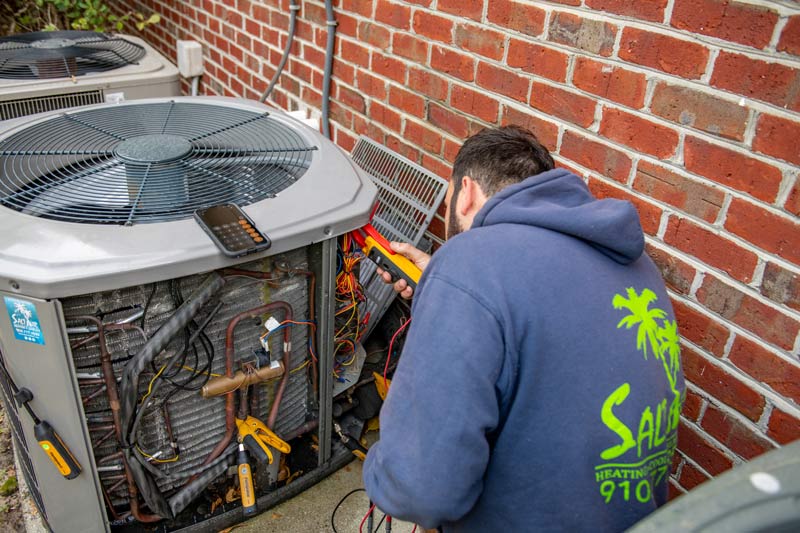
In a town this close to the water, small issues do not stay small for long. Look out for these warning signs.
Southport homeowners who catch these early tend to avoid costly breakdowns during peak season.
Being positioned at the mouth of the Cape Fear River means Southport homes catch salt air from the river side and the open ocean side alike. That double exposure accelerates corrosion on outdoor components far quicker than towns set back from the water.
Many Southport homes also date back decades, with ductwork and electrical systems that were never designed for today’s higher efficiency heat pumps. Older wiring paired with modern equipment can create mismatches that show up as intermittent failures or reduced performance.
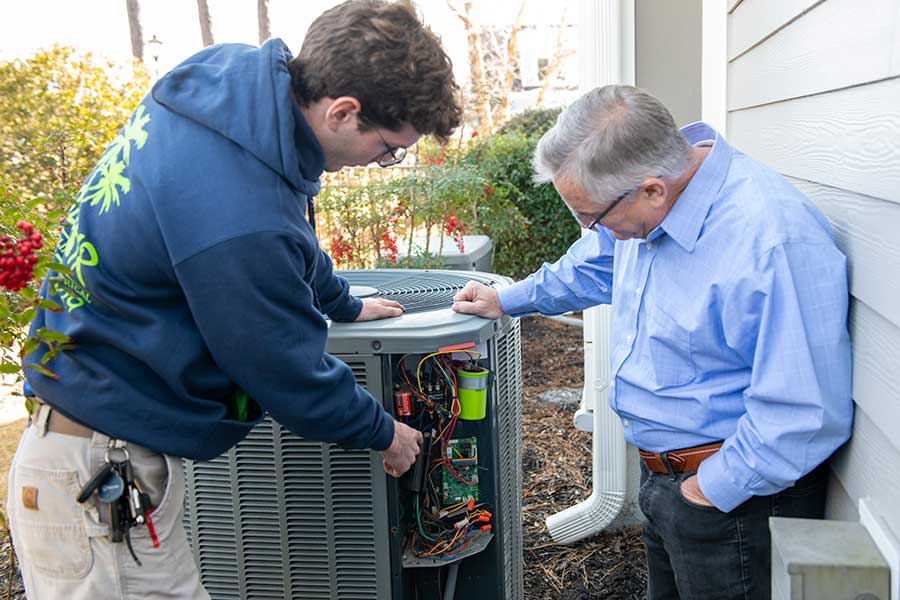
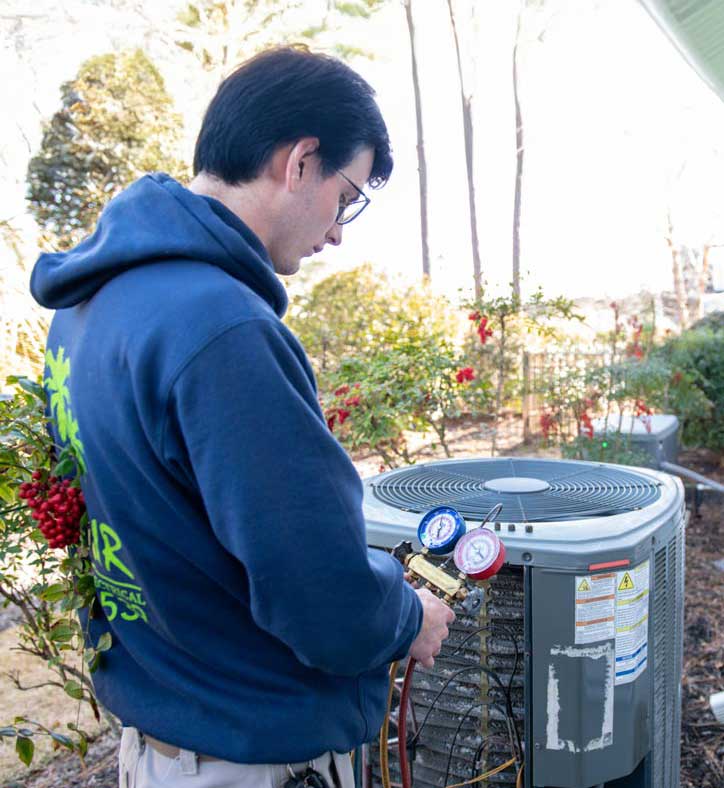
Every Southport repair begins with an inspection of both the equipment and the surrounding conditions, since a unit near the waterfront often shows different wear patterns than one further inland. Technicians check for corrosion, test electrical components, and confirm refrigerant levels before making any recommendations.
Once the cause is clear, Salt Air explains the repair options and moves forward only with approval. Marine grade parts are used whenever possible to help the repair hold up against the salt air that will keep coming regardless of the fix.
A homeowner named Patricia near the Southport waterfront called after her heat pump began making a grinding noise every time it kicked on. The technician found that salt corrosion had worn down a fan motor bearing faster than expected given the unit’s age. After replacing the motor and applying a protective coating recommended for coastal exposure, the system ran quietly again. Patricia said she had not realized how much the salt air was shortening the life of her equipment until the technician walked her through it.
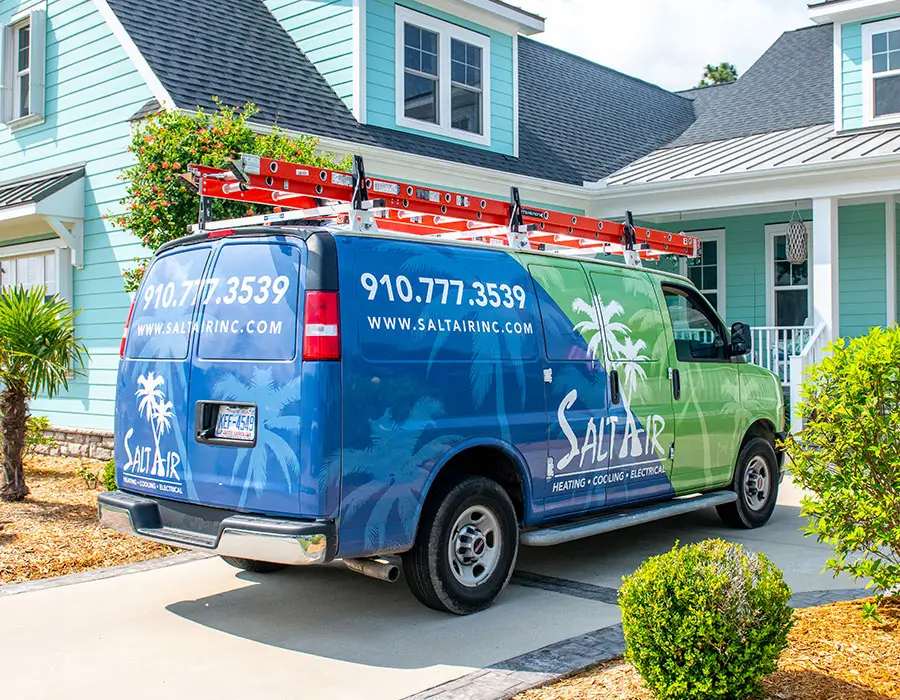
Southport homeowners deal with conditions most repair companies are not used to handling. Here is what makes a difference.
That experience means fewer repeat visits and equipment that lasts longer despite the salt air.

Salt in the air speeds up corrosion on metal components, especially on outdoor units positioned near the coast or a river mouth like Southport’s.
Yes, though older wiring and ductwork sometimes need adjustments to work well with newer equipment, which a technician can evaluate during a repair visit.
Twice a year is a good baseline for homes this close to the water, since salt exposure accelerates wear compared to inland properties.
Protective coatings, regular rinsing, and prompt repairs when corrosion first appears all help extend the life of a heat pump near the coast.
Yes, technicians are experienced with a wide range of system ages, which is common in a historic town like Southport.