
the First Time
Customer Experience
Local Company
Easy Scheduling
Leland has grown faster than almost any town in the Cape Fear region, and new rooftops keep appearing across Brunswick Forest, Mallory Creek, and the neighborhoods branching off Highway 17. Bigger homes mean bigger heat pumps working harder to keep every room comfortable, and the marshy ground near the Cape Fear River adds extra humidity to the mix. When a system falls behind, Salt Air steps in to get it caught back up.
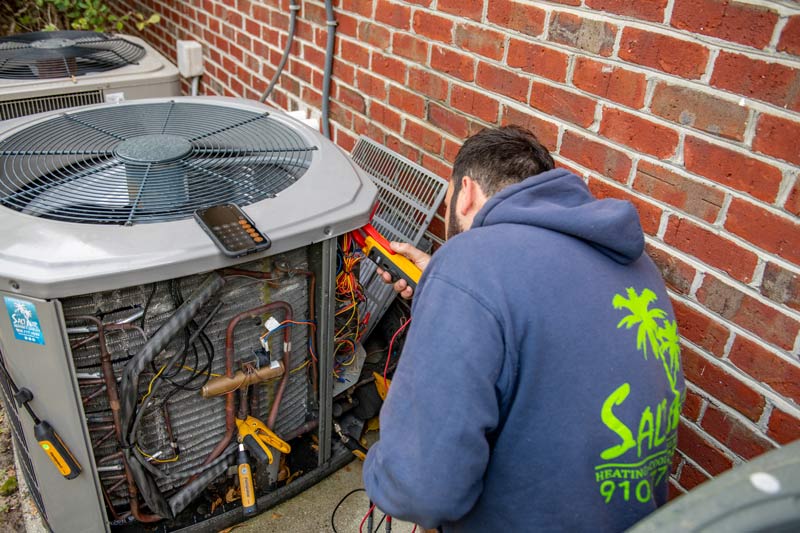
Newer homes do not mean problem free systems. Watch for these signs that a repair visit is due.
Catching these early keeps small issues from turning into full system failures.
Ground moisture near the marshes and creeks around Leland can work its way into outdoor units, leading to corrosion on electrical components over time. Newer subdivisions built on cleared wetland areas often see higher humidity around the home’s foundation, which puts extra load on a heat pump trying to keep indoor air dry.
Fast growth also means more homes running heat pumps at the same time, which can strain older transformers and electrical panels in some of Leland’s original neighborhoods. That added electrical stress sometimes shows up as tripped breakers or inconsistent heat pump performance.
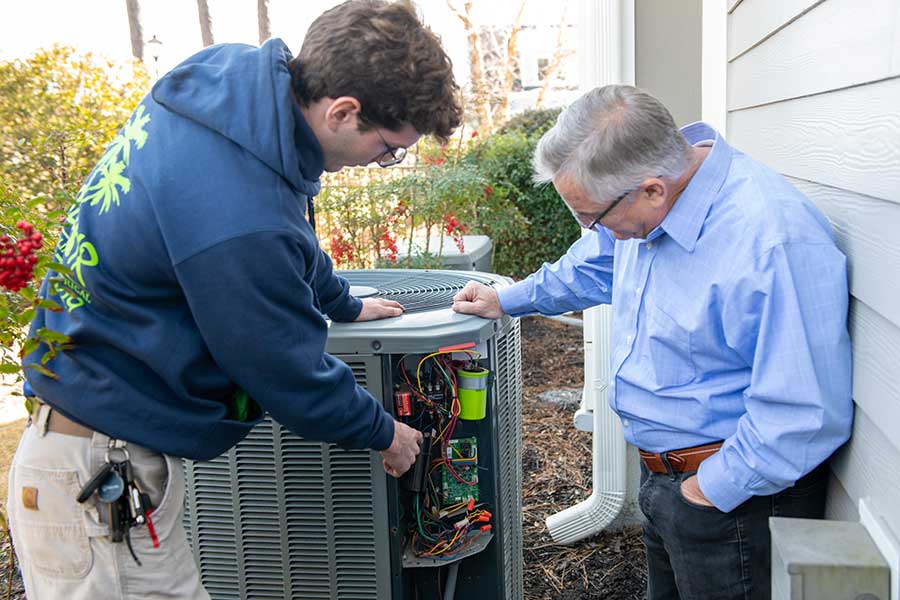
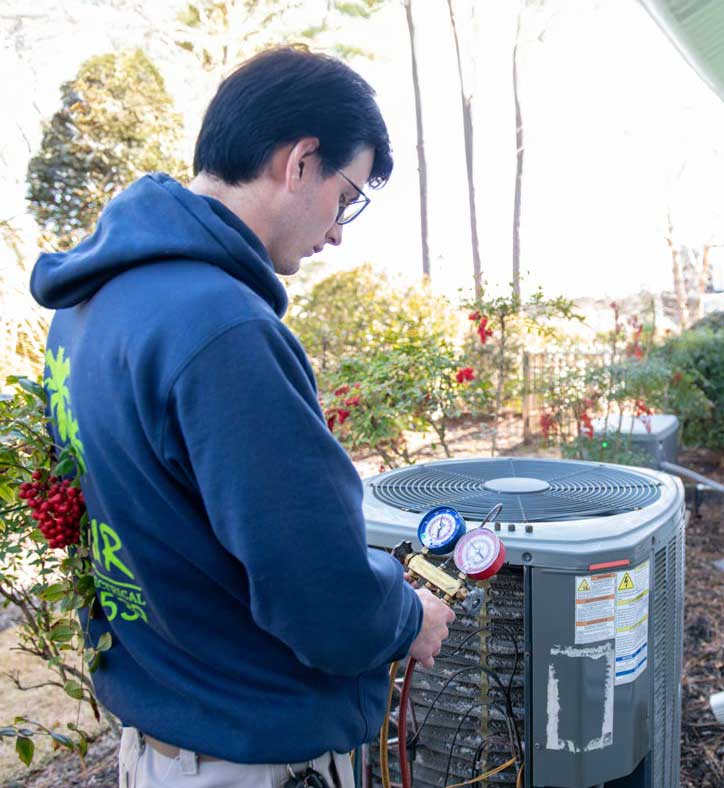
A technician arrives ready to check the full system rather than just the obvious symptom. That means testing refrigerant charge, inspecting electrical connections, and checking airflow through the ductwork, especially in larger homes where duct runs stretch further than average.
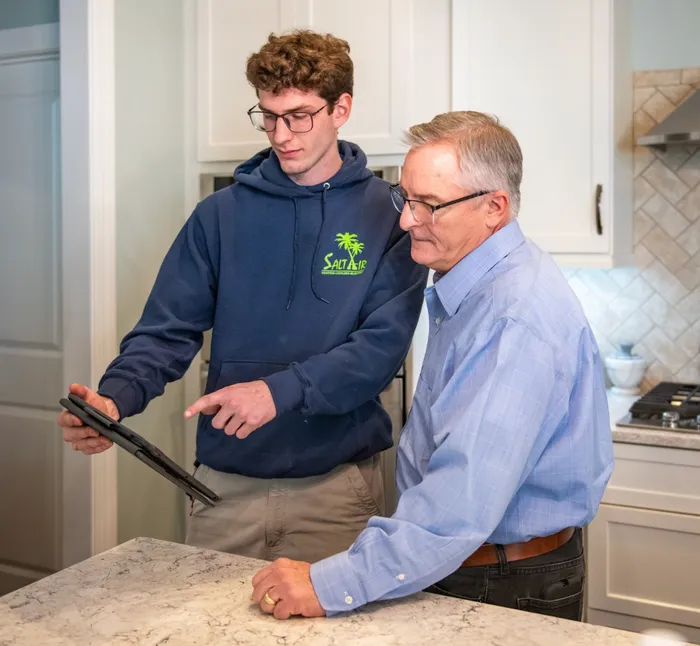
After pinpointing the cause, the technician explains what is wrong in plain terms and outlines the repair before starting. Every repair uses parts suited to handle Leland’s humid ground conditions, and workmanship is covered under warranty.
A homeowner named Derek in Brunswick Forest noticed his heat pump running nonstop without actually cooling the house. A Salt Air technician found a refrigerant leak near a fitting that had corroded from ground moisture beneath the unit. After repairing the leak and recharging the system, airflow returned to normal and the constant runtime stopped. Derek mentioned he had assumed the system just needed to work harder because the house was new, until the technician explained how common this issue is in the area’s wetter soil.

As Leland keeps growing, homeowners want a repair team that understands the area’s unique housing boom. Here is what keeps them calling Salt Air.
That local knowledge makes a real difference when something goes wrong.
Even new systems can struggle with the area’s humid ground conditions and larger home layouts, which is why regular checkups matter regardless of a home’s age.
Excess moisture near the outdoor unit can speed up corrosion on electrical parts, which is why keeping the area around the unit clear and dry helps extend its life.
A properly sized and maintained system usually can, though larger homes benefit from more frequent checkups to catch strain before it becomes a bigger issue.
Same-day appointments are often available, especially for issues affecting comfort during extreme heat or cold.
No, repairs can be scheduled regardless of whether a home warranty is in place, and Salt Air backs its own work with a separate workmanship warranty.