
the First Time
Customer Experience
Local Company
Easy Scheduling
What was once a quiet stretch of marsh across the river from Wilmington is quickly becoming one of the busiest growth corridors in Brunswick County. New homes, shops, and a busier stretch of Highway 17 have followed the growth around Belville, but the low, marshy ground underneath has not changed, and that still shapes how heat pumps perform here.
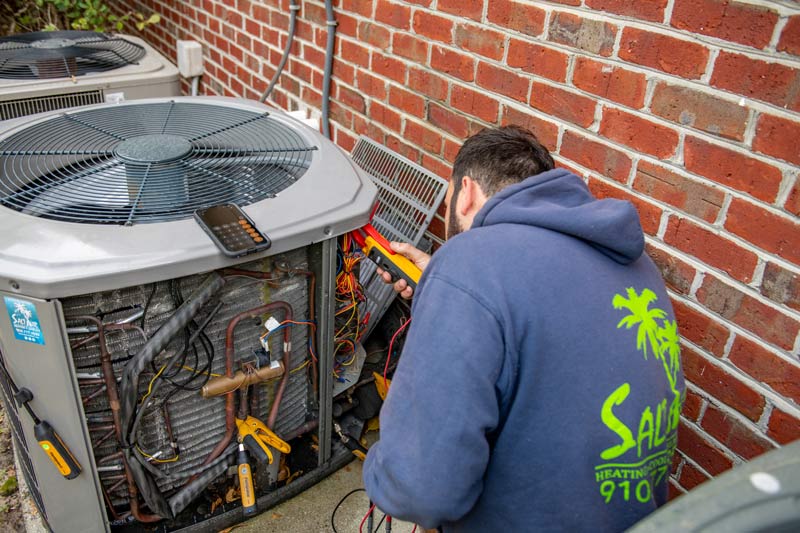
Low ground and heavy rain leave their own set of clues. Watch for these signs.
Homes near creeks or low lying lots tend to notice these signs first.
Belville’s low elevation and proximity to Sturgeon Creek and the surrounding wetlands mean drainage around outdoor units is often a challenge, especially after heavy rain events common to the area. Standing water near a unit’s base can accelerate wear on electrical components over time.
New construction on filled or graded marshland sometimes settles unevenly in the first few years, which can throw off duct connections or the level of an outdoor unit enough to affect performance.
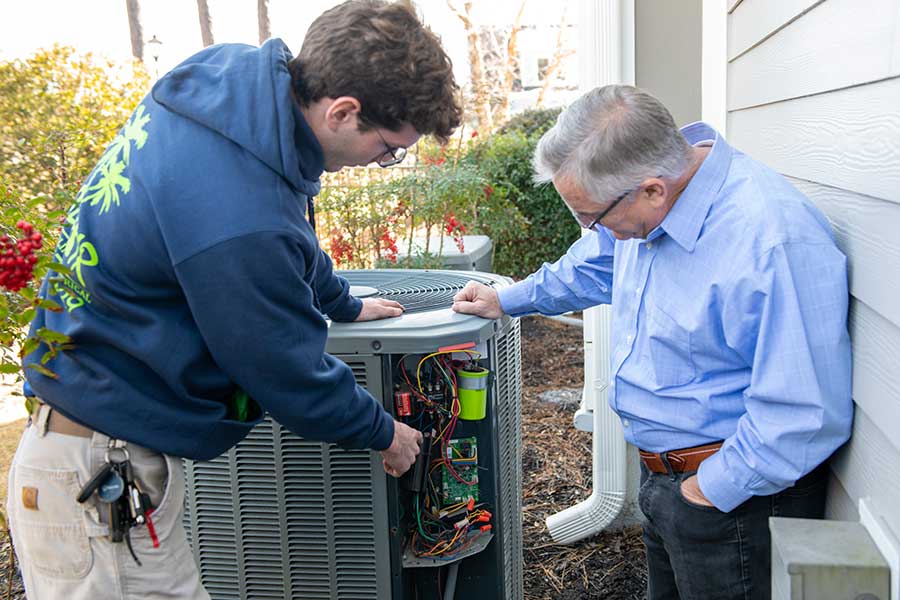
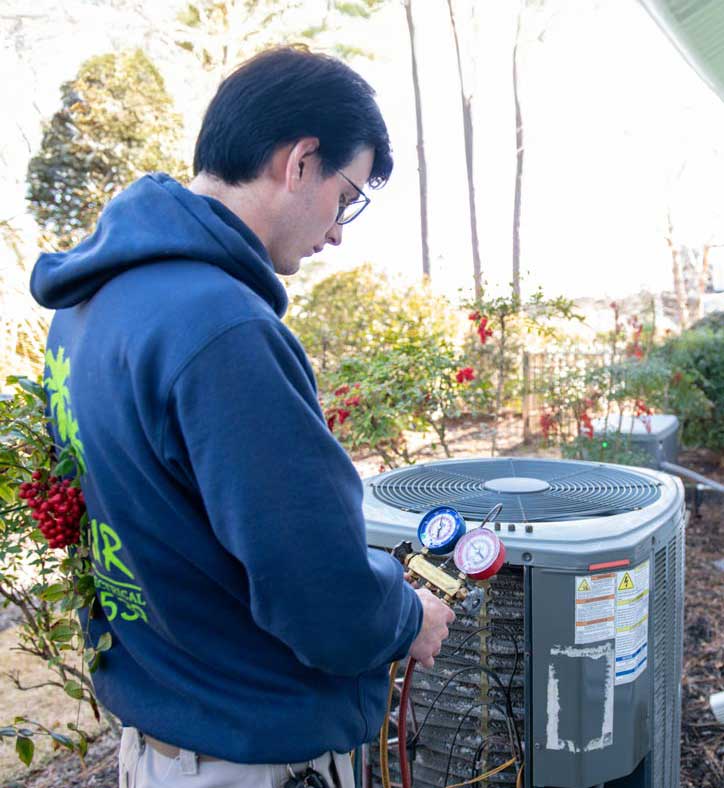
A technician checks drainage and unit placement first, since standing water and uneven settling are common issues in this part of Brunswick County. Ductwork gets inspected for gaps or shifts that may have developed as newer homes settle.
Repairs are completed with attention to proper unit elevation and drainage to help prevent the same issue from returning, and every job includes a workmanship warranty.
A homeowner named Renee in a newer Belville home called after noticing a musty smell every time her heat pump ran following a rainy week. A Salt Air technician found that water had been pooling near the outdoor unit’s base due to poor drainage from the property’s grading. After improving drainage around the unit and clearing moisture from a duct connection, the smell disappeared and the system ran normally. Renee said the issue had only shown up since the rainy season started.
Homeowners in this fast growing town want a repair team familiar with the area’s low lying ground. Here is what keeps them coming back.
That local knowledge helps homeowners avoid repeat problems.
Not always, new homes on low or filled ground can still experience settling or drainage issues that affect equipment.
Yes, standing water near the base of a unit can accelerate wear on electrical components over time.
The area’s low elevation and proximity to nearby creeks and wetlands mean moisture takes longer to clear than in higher, better drained areas.
Yes, a technician can often improve drainage or elevation around an existing unit without a full reinstall.
Response times are often quick, especially for issues affecting comfort right after heavy weather.