
the First Time
Customer Experience
Local Company
Easy Scheduling
Boiling Spring Lakes earned its name from the dozens of manmade lakes and ponds scattered throughout town, and that water is never far from any home here. The surrounding longleaf pine forest keeps much of the town shaded and quiet, but it also means pine straw, pollen, and a steady trickle of moisture find their way to outdoor equipment more than in busier, more open neighborhoods nearby.
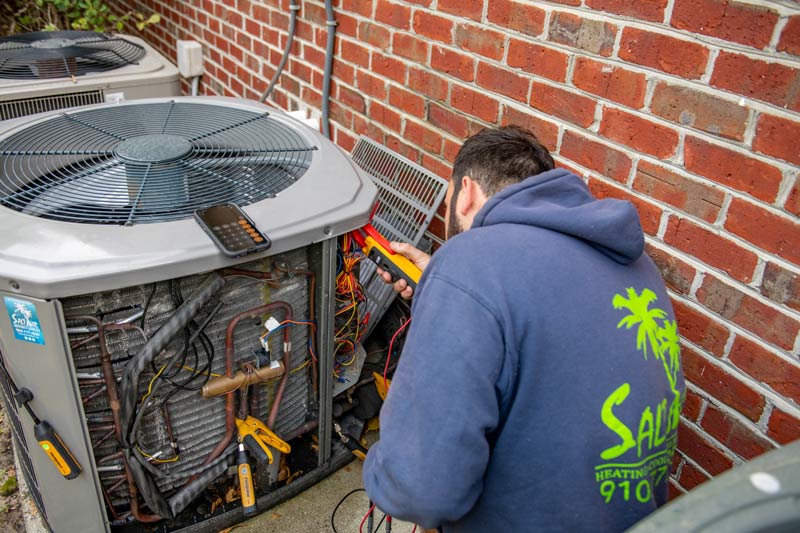
Life among the lakes and pines tends to produce a specific set of warning signs.
Homes closest to a lake or pond tend to notice these signs first.
With so many lakes and ponds throughout town, ground moisture sits close to the surface in many yards, keeping the air around outdoor units damp for longer stretches than in drier inland areas. The dense pine forest that gives Boiling Spring Lakes its quiet, wooded feel also drops a steady supply of pine straw and needles into coils throughout the year.
Large wooded lots mean outdoor units often sit farther from the house and closer to tree lines, which can make routine maintenance easy to overlook until a problem grows serious.
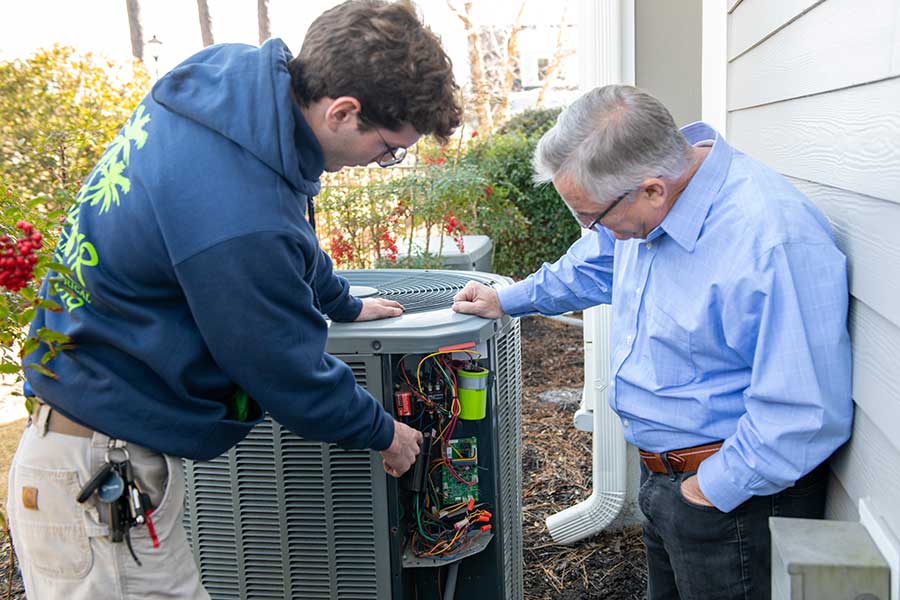
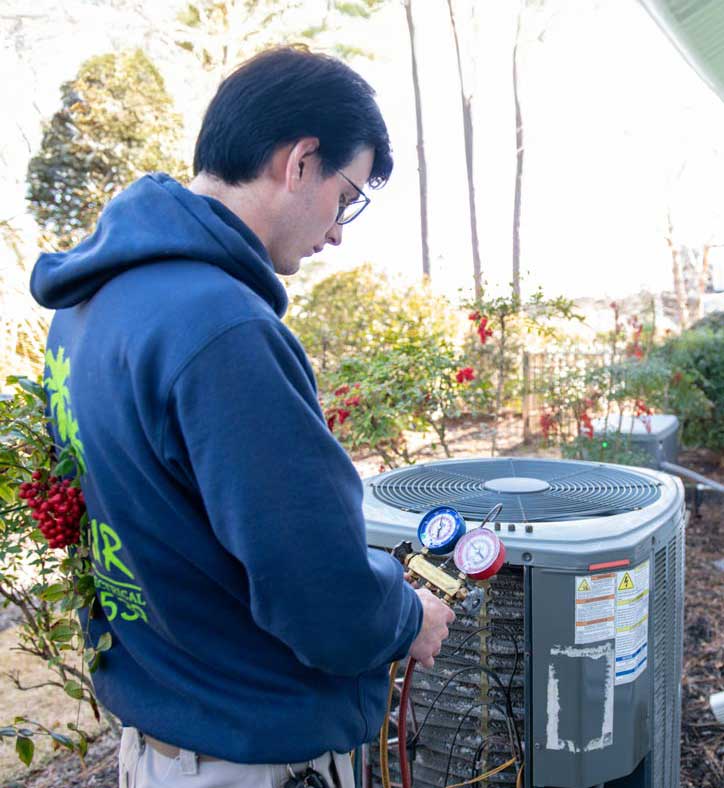
A technician starts by clearing pine debris from the outdoor coil, since buildup here is common given the surrounding forest. Moisture and drainage around the unit get checked next, particularly on lots close to one of the town’s many lakes.
Repairs use moisture resistant parts suited to the area’s consistently damp ground conditions, and every job includes a workmanship warranty.
A homeowner named Walter on a lot backing up to one of the town’s lakes called after his heat pump began running constantly without cooling well. A Salt Air technician found pine straw packed into the outdoor coil, combined with lingering ground moisture from the nearby water. After clearing the debris and improving drainage around the unit’s base, performance returned to normal. Walter mentioned he had cleared leaves before but never realized how much pine straw was collecting inside the coil itself.

Homeowners on wooded, lake adjacent lots want a repair team that understands the local conditions. Here is what keeps them calling Salt Air.
That local knowledge helps prevent the same issue from returning.

Yes, the added ground moisture near lakes and ponds can keep humidity higher around outdoor units than in drier areas.
Pine straw itself does not damage a coil directly, but buildup can restrict airflow and make the system work harder.
Twice a year is a good baseline, with more frequent coil checks recommended for heavily wooded properties.
Keeping some clearance around the unit helps reduce debris buildup and improves overall airflow.
It can be, which is why proper placement and drainage around the unit matter in areas with a lot of standing water nearby.